
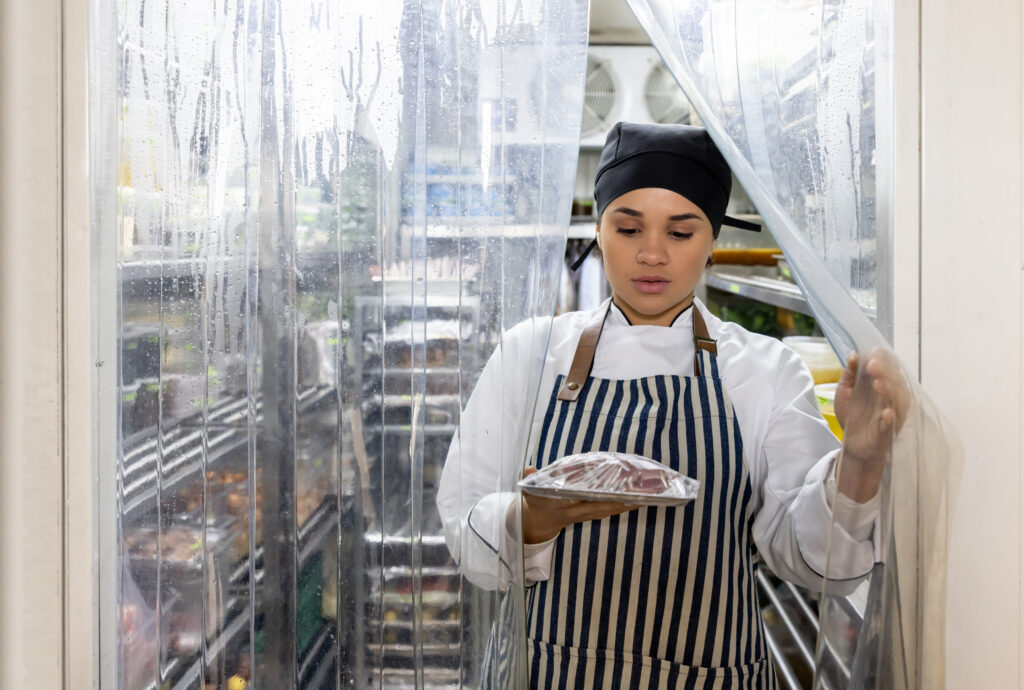
During the holidays, walk-in coolers and freezers hold more than they do at any other time of year. Extra deliveries, catering orders, party trays, and bulk holiday ingredients fill every shelf. That extra product is good for business, but it puts real strain on your refrigeration system. An overloaded walk-in can struggle to hold temperature, and a failure in December can mean throwing out thousands of dollars in food.
Here’s how holiday stocking affects walk-ins, and what you can do to keep yours running through the season.
How Overloading Causes Walk-In Failures
A walk-in cools by moving cold air from the evaporator across the stored product. When shelves are packed too tightly or boxes are stacked against the evaporator, that air can’t circulate. Some areas get too warm, the system runs longer to compensate, and components wear faster. Over time, that extra runtime can lead to iced-over coils, compressor strain, and temperature problems.
Heavy door traffic makes it worse. Every time the door opens, warm air rushes in, and during the holidays the door may open hundreds of times a day.
Keep Airflow Clear
Good airflow is the most important part of a healthy walk-in. A few simple habits help:
- Keep product away from the evaporator fans and coils so air can move freely
- Leave space between boxes and shelving, and between shelving and walls
- Store food at least 6 inches off the floor
- Avoid stacking boxes to the ceiling
- Don’t block the return air path back to the evaporator
If you’re short on space, consider more frequent deliveries instead of stocking everything at once.
Don’t Load Hot Food Into the Walk-In
Placing large batches of hot food directly into a walk-in forces the system to work much harder and can raise the temperature of everything around it. Cool food first using approved methods like shallow pans, ice baths, or a blast chiller, then move it to the walk-in.
Check Door Gaskets, Closers, and Strip Curtains
Doors are one of the most common weak points during the holidays. Inspect:
- Gaskets: Look for cracks, tears, or flattened sections. A simple test is to close the door on a sheet of paper. If it slides out easily, the seal may not be tight.
- Door closers and hinges: The door should close and seal on its own. Staff in a hurry often don’t close it fully.
- Strip curtains: These reduce warm air entering when the door is open. Replace strips that are torn or missing.
- Door heaters on freezers: Frost or ice around the frame can mean a heater problem.
Watch Temperatures Closely
During busy periods, check walk-in temperatures at least twice a day and log them. Coolers should hold food at 41°F or below, and freezers should stay at 0°F or below. A slow upward trend is often the first sign of trouble, and catching it early can save your product.
For other warning signs to watch for, read our guide to the 7 signs your commercial refrigerator needs repair before it fails.
Keep the Condenser Clean
The condenser releases heat from the refrigeration system. When its coils are coated in dust or grease, the system can’t shed heat efficiently and has to run longer. Have condenser coils cleaned before the holiday season, especially if the condensing unit sits near a kitchen exhaust or on a dusty rooftop.
Have a Backup Plan
If a walk-in fails during the holidays, fast action protects your product. Know where you can move food temporarily, keep a thermometer handy, and keep the door closed as much as possible while you wait for service. Our guide on what to do when equipment breaks down after hours covers the first steps to take.
Frequently Asked Questions
Why is my walk-in cooler not holding temperature?
Common causes include blocked airflow, damaged door gaskets, a dirty condenser, iced-over evaporator coils, or a failing component. If temperatures keep rising, call a technician.
How full is too full for a walk-in cooler?
If product is blocking the evaporator fans, pressed against walls, or stacked to the ceiling, the walk-in is overloaded. Air needs room to circulate around stored food.
How can I tell if my walk-in door gasket is bad?
Look for cracks, tears, or flattened sections. Close the door on a sheet of paper; if it slides out easily, the gasket may need replacement.
What temperature should a walk-in cooler and freezer be?
Walk-in coolers should hold food at 41°F or below, and walk-in freezers should stay at 0°F or below.
What should I do if my walk-in stops working during a busy night?
Keep the door closed, check product temperatures, move critical items to working refrigeration if needed, and call for emergency service. Rice Equipment offers 24/7 emergency repair.
Walk-In Cooler and Freezer Service From Rice Equipment
Rice Equipment provides commercial refrigeration and freezer repair for restaurants, caterers, and commercial kitchens across the Springfield area. Schedule preventative maintenance before the holidays, and call us any time with our 24/7 emergency service. For a full pre-season list, see our pre-Thanksgiving equipment checklist. Call (417) 864-4885 or contact us.